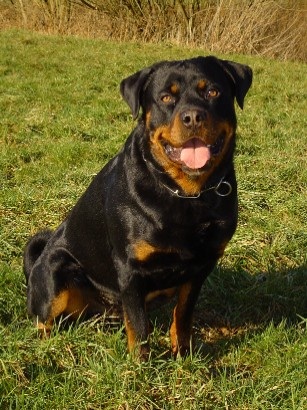
Since the day of the awful attack on a postman by dangerous rottweilers in Gazeley Lane, Trumpington, Cambridge in December 2008 the police have been hung up on the issue of weather the attack occurred on a public road or not. At first the police said they were investigating if the attack was on a private road they are now saying they can’t bring a prosecution against the owner due to the fact the attack was on private land.
It is important that this case goes before the court not only to ensure justice is administered, but also so that the injured postman has the opportunity, if the court determines it appropriate, to receive compensation. I am joining those calling for the police to reconsider their decision not to prosecute. I think there has been a misinterpretation of the law by the police, and prosecutors ought put the case before the courts and if there is a grey area they not the police or prosecutors should decide on it.
Section 3 (1) of the Dangerous Dogs Act 1991 states that If a dog is dangerously out of control in a public place the owner (or the person for the time being in charge of the dog) is guilty of an offence,
Section 10 (2) of the Dangerous Dogs Act 1991 defines a public place as:
“public place” means any street, road or other place (whether or not enclosed) to which the public have or are permitted to have access …
There are many private roads like Gazeley Lane in Cambridge and for the police to suggest that the Dangerous Dogs Act, and perhaps other laws do not apply in them, or in other areas which while privately owned the public have access to is nonsense.
Section 10 (2) defines a public place as meaning any street, road or other place to which the public have, or are permitted to have access. This is a wide definition of a public place which covers some areas, like privately-owned shopping precincts, that have not hitherto been covered in similar legislation. It also covers places which are temporarily open to the public, for instance, a fete or fair.
This section specifically includes the common parts of a building containing two or more separate dwelling. This is intended to cover those parts of, for instance, a block of flats where, although there may be a secure front entry door, so that the interior of the flat is not a place to which the public has unrestricted access, nevertheless the common parts are, in all other respects, a public place.
This is exactly the kind of case where magistrates, or a jury, not the police should be making the decision on if the dogs were dangerously out of control in a public place.
A Cambridge Evening News article published on the 9th of January 2009 states:
A police spokeswoman confirmed the attack was on private land, which meant they could not bring a prosecution under the Dangerous Dogs Act, which states animals must be kept under control in a public place.
Cambridgeshire police have clearly in my view misinterpreted the act. Their corporate awareness of where the law applies to private land which the public have access to is not very good, for example the police have told me they have no powers to deal with youths dangerously and illegally driving mopeds and similar vehicles when they are on private roads such as those leading to the Beehive Centre on Coldhams lane. The Road Traffic Act and the Antisocial Behavior Act apply to most of the city’s private roads.
In the case of the dogs, then the 1871 Dangerous Dogs Act parts of which are still in force and have been clarified by the 1991 act could be used, as that applies, everywhere, even in and around a private house, however no criminal charges can be brought, only orders for the destruction or control of the dog(s) under this act.
Cambridgeshire’s Chief Crown Prosecutor is Richard Crowley, his contact details can be found via this link, and members of the Police Authority are listed here, these I believe will be the most effective people to lobby requesting the decision not to prosecute be reversed.
18 responses to “Cambridgeshire Police Not to Prosecute In Case of Rottweiller Seriously Injuring Cambridge Postman”
I have written to Cambridgeshire’s Chief Crown Prosecutor Richard Crowley:
I have written to Mr Wilkins, a member of Cambridgeshire Police Authority and a County Councillor:
Thank you for your email concerning the case below. No file has been received from the police and accordingly the CPS has not been asked to provide a charging decision on this case. I am afraid there is no decision to reverse and the reported comments in the newspaper may be somewhat premature at this stage.
One has to consider the purpose of the law.
If the postman was going about his business in a
proper way then he is entitled to protection,
and was in an area with public access. If,
implausibly, the postman was in effect trespassing, then he has less protection, being
in a place with no public access.
I live in London; my sister lives in Gazeley lane.
MP Angela Smith has just gained permission from Parliament to bring in a Bill to amend the Dangerous Dogs act to cover private property.
The case of the Cambridge postman was mentioned, so it appears the intention is to cover private roads.
The Telegraph has an article on this proposed amendment.
This cse is extremely interesting to my family and I. My 78 year old father was savaged by a dog in a scrap yard business a couple of weeks ago. He has had to have plastic surgery and a 10 day stay in hospital, which must have cost the NHS/tax payer thousands. Essex police have written to me telling me there is nothing they can do as the incident occured on private land. We went to the local paper, Brentwood Gazette, which gave it headline news. Guess what, now the police are looking into it.
I have still been told there may be little they can do.
The law needs a good ‘kick’ if it does not cover these cases.
This particular dog has bitten three times and caused hospital treatment. One bite was to an Essex Police Dog Handler, a postman and now my father and it is still alive!
T. Bown, Essex
The Cambridge News have a piece today “Landmark case of postie mauled by Rottweiler”:
http://www.cambridge-news.co.uk/cn_news_home/DisplayArticle.asp?ID=436739
A prosecution was brought:
http://www.cambridge-news.co.uk/cn_news_home/DisplayArticle.asp?ID=441962
The wheels of justice in this country go far too slowly – the Magistrates have referred it to Crown Court.
I work in an industry that deal with loose dogs on a daily basis. After reading this news letter, it is ridiculous that the owners are not being held accountable for the actions of their animals. It is appalling that they can enter a “not guilty” plea. It was “their animals” they are responsible. If it were a child being mauled, the child would be dead…
There’s an update in the paper today:
http://www.cambridge-news.co.uk/cn_news_home/DisplayArticle.asp?ID=484925
I think that it was wrong that the decision as to if the road was a public place was made by a Judge rather than a Jury.
DEFRA have launched a consultation on “Tackling irresponsible dog ownership”; including on:
“Extending the criminal offence of allowing a dog to be dangerously out of control to private property (where the dog has a right to be);”
http://www.defra.gov.uk/consult/2012/04/23/dangerous-dogs-1204/
I’ve responded to the consultation:
On Monday, Ms. Willis’s office opposed Mr. Meadows’s appeal in a
filing, as did several legal scholars, former federal prosecutors, and judges in two amici briefs.
Ms. Willis argued that Mr. Meadows already “failed to meet his low
Highly energetic blog, I enjoyed that a lot. Will there be a part 2?|
ujin 3rfe n jbre jntgefv n gjnerfn jnt4gefn n5tr gnktrgefniokj mt4ge fjkt4ef knt4e nrf nk rnef nkt4ge fn ntefnkge nk trgjnkefn fe
good vibe